Travel Advice & Safety
Before you travel, check your government's latest advice on health, safety, local laws and entry requirements for your destination on the official travel advisory website.

Tiger Holidays · Turkey
Few countries pack so much into one holiday. Turkey sits where Europe meets Asia, and almost everywhere you go something older is showing through: a Roman theatre behind a beach resort, tombs cut into a cliff above a harbour, a Byzantine church carved out of volcanic rock.
This guide is a short introduction to six places we send travellers to most often, and to what is still standing in each of them.
Mediterranean Coast · ancient Pamphylia
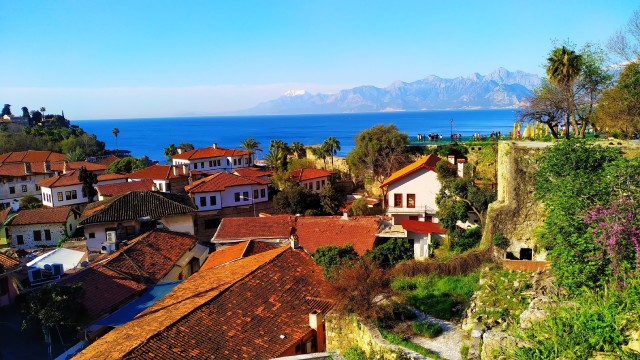
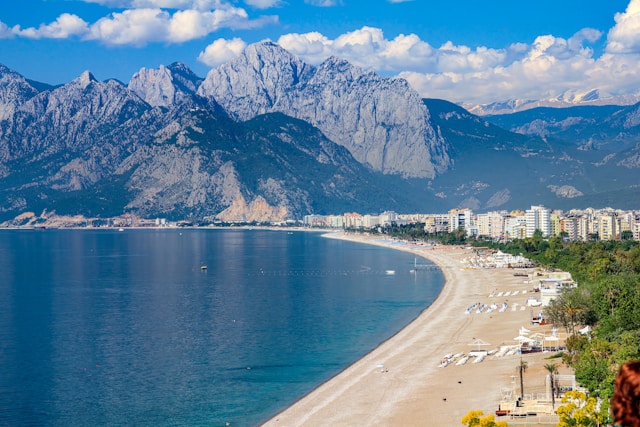
Antalya was founded in the second century BC as Attaleia by Attalus II, king of Pergamon, as a harbour for his fleet. Rome, Byzantium, the Seljuks and the Ottomans all took their turn, and each left something behind.
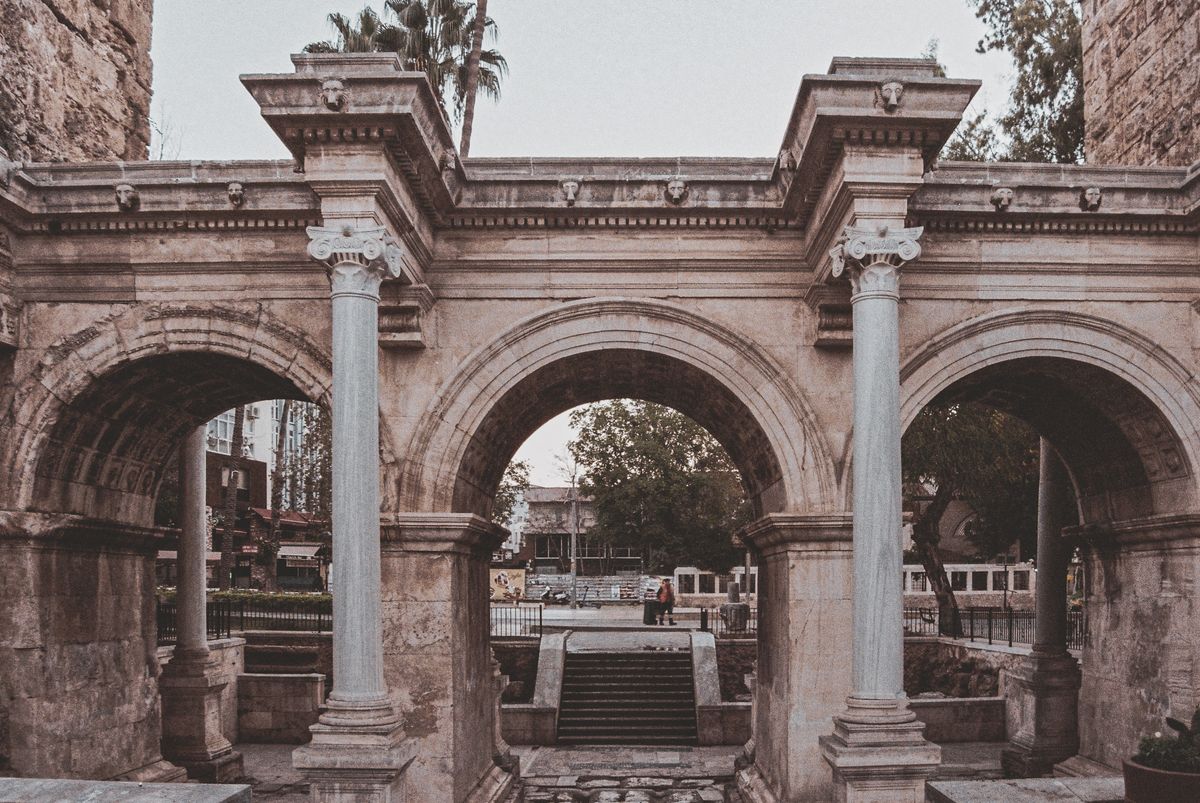
The clearest survival is Hadrian's Gate, a three-arched marble gateway built into the city walls for the visit of the Emperor Hadrian in AD 130. Behind it lies Kaleici, the walled old quarter, where Ottoman timber houses lean over lanes that run down to the Roman harbour.
The country around Antalya is unusually rich in ruins. Within an easy drive you can stand in the stadium at Perge, sit in the Roman theatre at Aspendos, among the best preserved anywhere and still used for performances, or walk out to the Temple of Apollo at Side, whose columns stand right at the water's edge.
Highlights worth building a day around:
Hadrian's Gate and the Kaleici old town;
the Roman theatre at Aspendos;
Perge, with its colonnaded street and stadium;
the Temple of Apollo at Side, on the shoreline;
Termessos, the mountain city that held out against Alexander the Great; and
the Duden waterfalls, where the river drops straight into the sea.
Turquoise Coast · ancient Lycia
Fethiye stands on the site of Telmessos, one of the cities of Lycia. You do not have to look for the evidence: the cliff above the town is cut with rock tombs, and the grandest of them, the Tomb of Amyntas, was carved in the fourth century BC as the facade of a temple, complete with columns and pediment.
A short way inland is Kayakoy, which the Greek community knew as Levissi. It was emptied following the population exchange of 1923 and never resettled. Several hundred roofless stone houses and two churches remain on the hillside, quiet and unlike anything else on this coast.
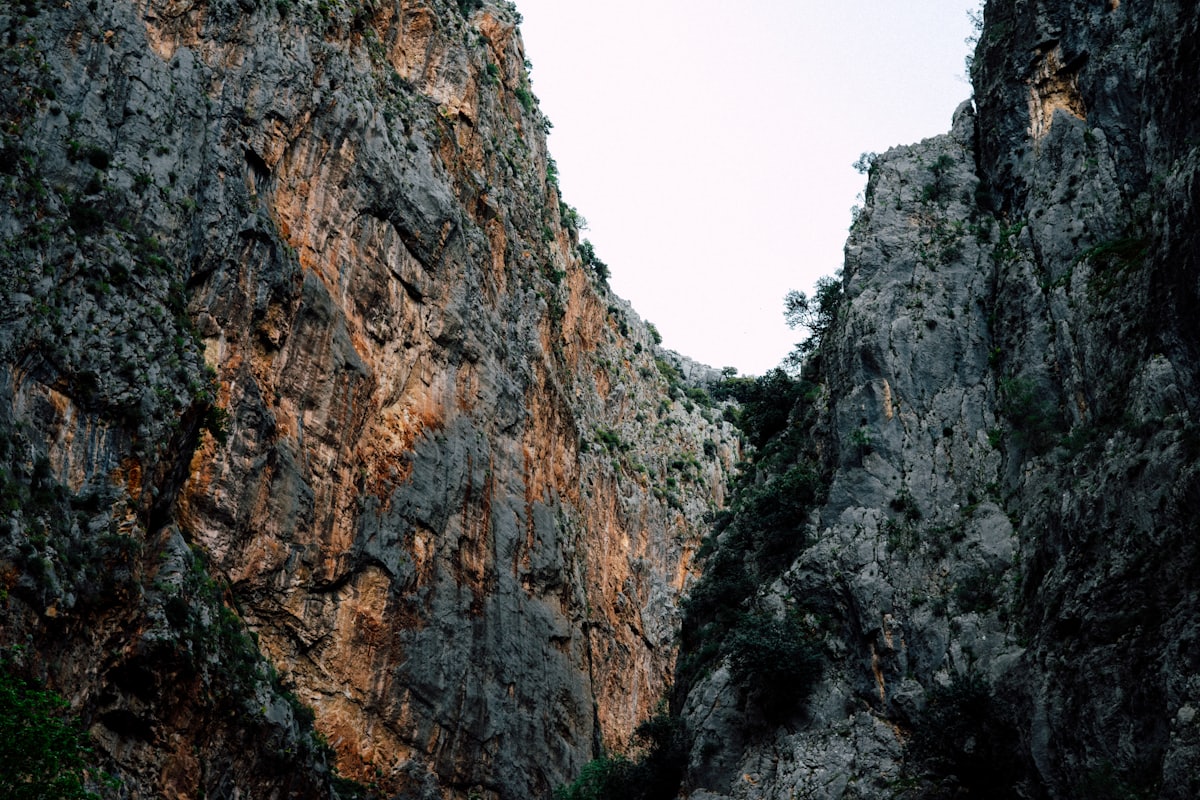
The coastline itself is the other reason people come: the lagoon at Oludeniz, the descent into Butterfly Valley, the cold water running through Saklikent Gorge. The Lycian Way, a waymarked long-distance path, threads the whole region together.
Highlights worth building a day around:
the Lycian rock tombs above the town, including the Tomb of Amyntas;
Kayakoy, the abandoned village of Levissi;
the lagoon at Oludeniz and Butterfly Valley;
Saklikent Gorge;
the hilltop ruins and Lycian tombs at Tlos; and
Xanthos and Letoon, together a UNESCO World Heritage Site.
Aegean Coast · ancient Halicarnassus
Bodrum was Halicarnassus, capital of Caria and the birthplace of Herodotus, the first writer we would recognise as a historian. In the middle of the fourth century BC a tomb was raised here for the ruler Mausolus on such a scale that it was counted among the Seven Wonders of the Ancient World, and gave every later grand tomb its name: the mausoleum.
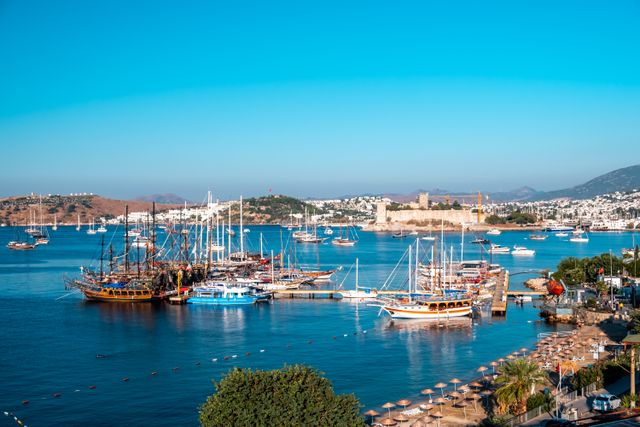
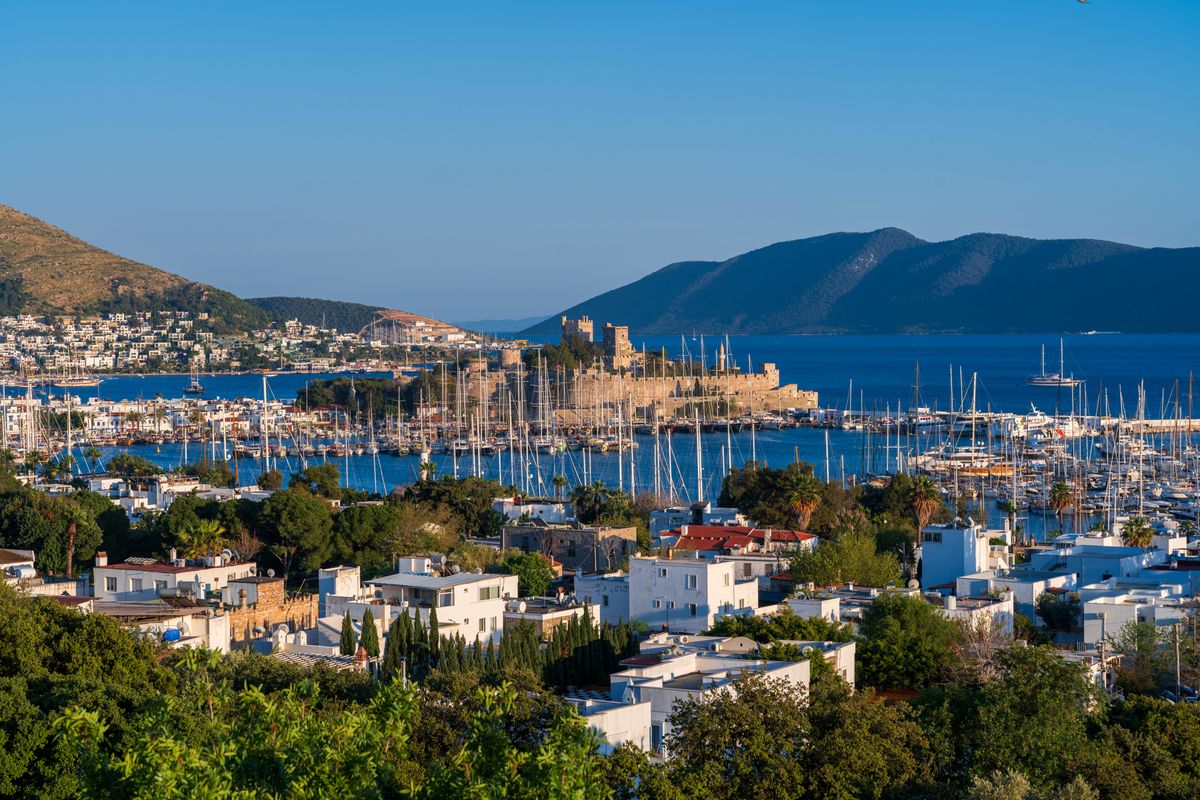
The Mausoleum itself was brought down by earthquakes and then quarried for stone. Much of that stone went into the Castle of St Peter, begun in 1402 by the Knights Hospitaller on the promontory between the two harbours. The castle survives in good order and now houses the Museum of Underwater Archaeology, whose collection of excavated ancient shipwrecks and their cargoes is among the most important in the world.
Away from the town the peninsula is a string of separate villages. Gumusluk is built over ancient Myndos, with part of the old harbour wall still visible under the water.
Highlights worth building a day around:
the Castle of St Peter and the Museum of Underwater Archaeology;
the site of the Mausoleum of Halicarnassus;
the ancient theatre, cut into the hillside above the town;
the Myndos Gate, the surviving land gate of Halicarnassus; and
Gumusluk, built over the ruins of ancient Myndos.
Aegean Coast · ancient Caria
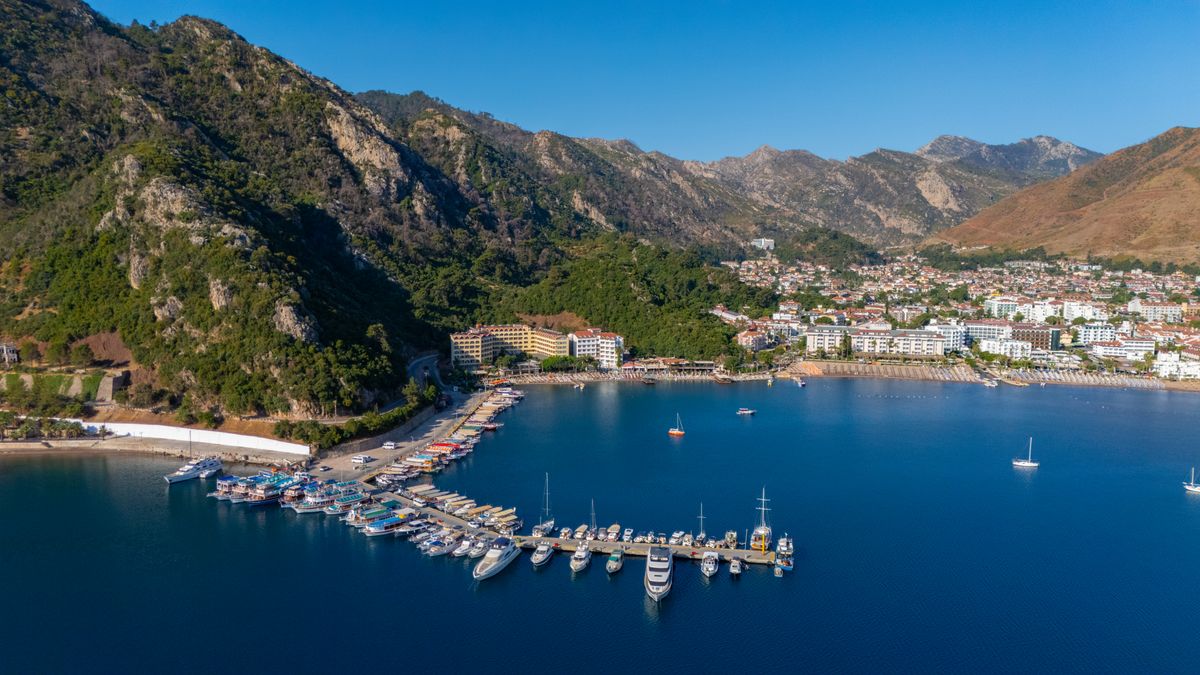
Marmaris occupies the site of Physkos, a Carian port on the trade route down this coast. Its castle was rebuilt in 1522 by Suleiman the Magnificent, who gathered his fleet in the bay before the siege of Rhodes; the building now holds a small archaeological museum and the best view over the harbour.
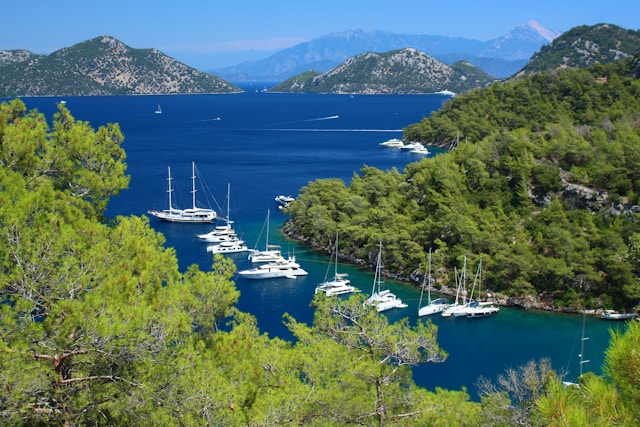
What makes Marmaris unusual is its setting. The town sits at the head of a deep, sheltered gulf ringed with pine-covered hills, which is why it has become one of the largest sailing centres in the eastern Mediterranean.
The peninsulas either side hold some remarkable sites. Knidos, at the far tip of the Datca peninsula, was famous in antiquity for its statue of Aphrodite. East of the resort, the rock-cut tombs of Kaunos look across the Dalyan delta.
Highlights worth building a day around:
Marmaris Castle and its museum;
Knidos, on the tip of the Datca peninsula;
the rock tombs of Kaunos, above the Dalyan delta;
Sedir Island, with its unusual shell-sand beach; and
the boat trip round the bays of the gulf.
Two continents · Byzantium, Constantinople, Istanbul
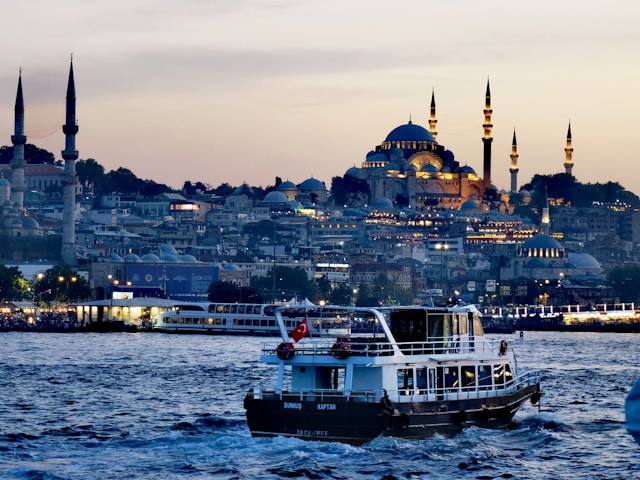
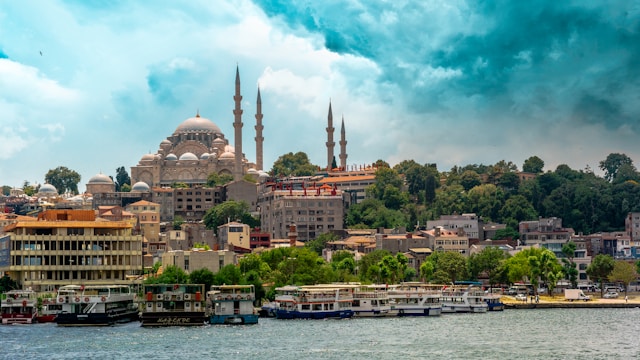
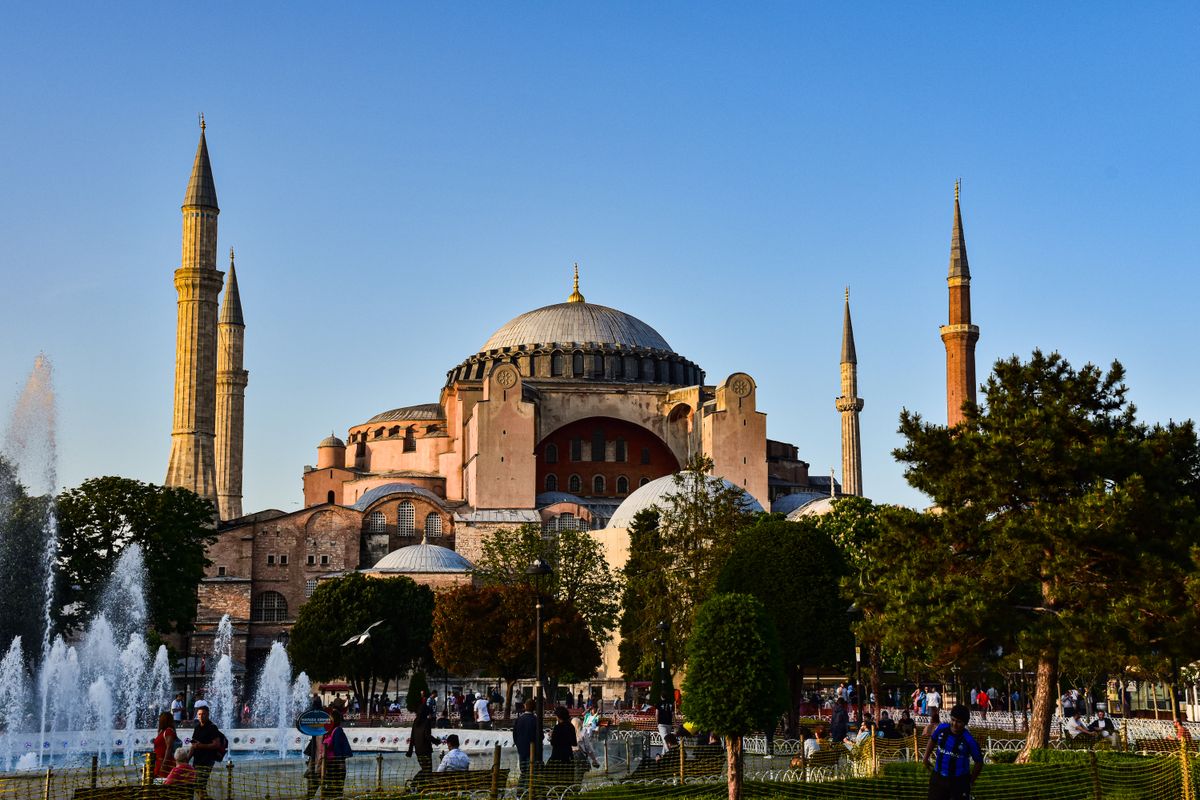
Istanbul has been the capital of two empires and has carried three names. Founded as Byzantium, refounded as Constantinople in AD 330 and made the seat of the Roman world in the east, it then became the Ottoman capital after 1453. Very few cities can show you that much history inside a single walk.
Hagia Sophia was completed in 537 under the Emperor Justinian, and for something close to a thousand years its dome enclosed the largest interior space on earth. A few minutes away, the Basilica Cistern holds up its roof on a forest of columns sunk underground in the sixth century, and the Sultan Ahmed Mosque, the Blue Mosque, was built facing Hagia Sophia between 1609 and 1617.
Topkapi Palace was the Ottoman court for some four centuries, and the Suleymaniye Mosque is the masterpiece of Sinan, the architect who shaped the city's skyline. Between them run the Grand Bazaar, one of the oldest covered markets in the world, and the Bosphorus, which is still the best way to understand the place.
Highlights worth building a day around:
Hagia Sophia and the Sultan Ahmed (Blue) Mosque;
Topkapi Palace and its treasury;
the Basilica Cistern;
the Suleymaniye Mosque, by the architect Sinan;
the Grand Bazaar and the Spice Bazaar; and
a ferry along the Bosphorus.
Central Anatolia · volcanic landscape
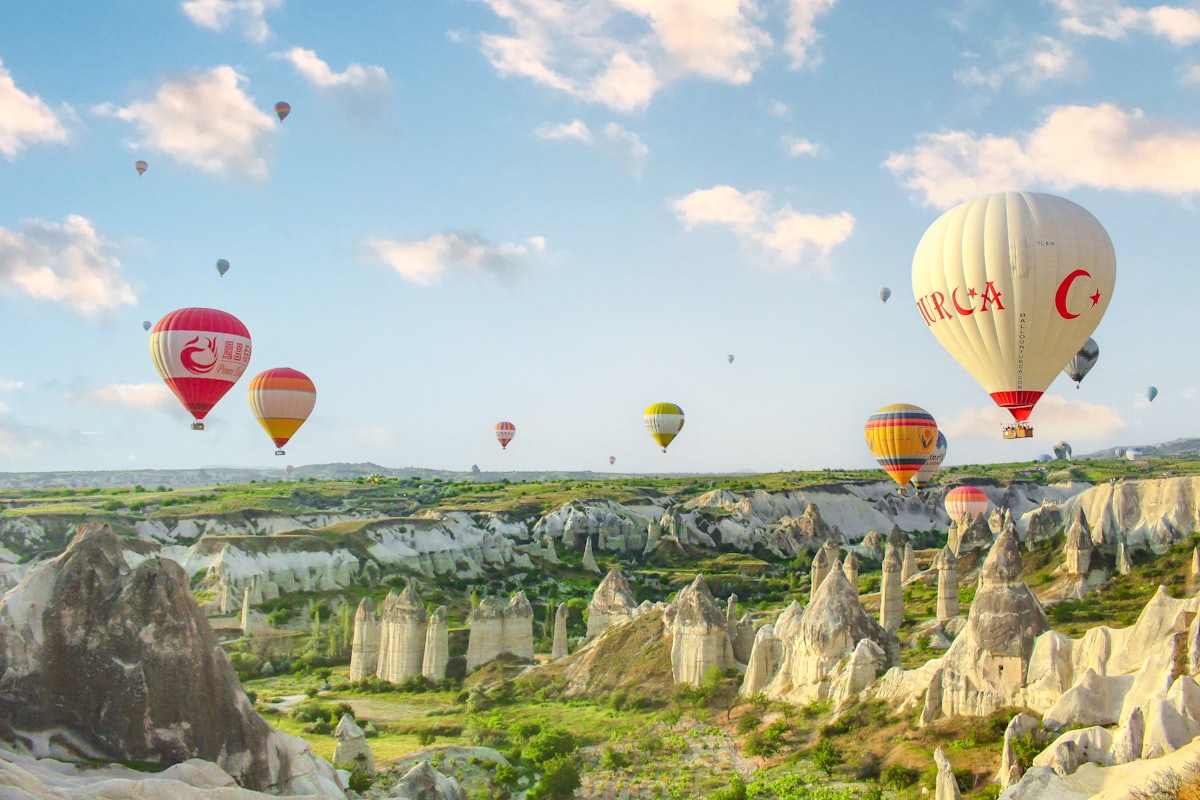
Cappadocia was made by volcanoes. Ash from Erciyes and Hasandag settled and hardened into soft tuff, and wind and water then cut it into the pillars and cones known as fairy chimneys. Because the rock is soft enough to carve and firm enough to hold, people hollowed it out rather than building on it.
At the Goreme Open-Air Museum, a UNESCO World Heritage Site, you can walk into a cluster of rock-cut churches whose Byzantine frescoes have survived on the walls. Deeper underground, the cities at Derinkuyu and Kaymakli descend through level after level, with ventilation shafts, wells, stables and heavy stone doors that could be rolled across the passages from the inside, refuges built for times when the surface was not safe.
Most visitors also go up at dawn. The valleys fill with hot-air balloons at first light, which is the moment the landscape makes the most sense: a whole region shaped by erosion and then quietly carved into by hand.
Highlights worth building a day around:
the Goreme Open-Air Museum and its painted rock churches;
the underground cities at Derinkuyu and Kaymakli;
the rock castle at Uchisar;
the churches along the Ihlara Valley;
the potters of Avanos, on the Kizilirmak; and
a balloon flight at sunrise.
We run package holidays to four of these destinations, with departures from London, Manchester and Leeds Bradford:
Antalya - the Mediterranean coast and the ruins of Pamphylia;
Bodrum - ancient Halicarnassus and the Aegean peninsula;
Marmaris - the sheltered gulf and the Carian coast; and
Istanbul - city breaks between two continents.
You can see every resort and departure airport we fly to on our Popular Destinations page.
Tiger Holidays
Compare live flight and hotel packages to Turkey by departure airport, dates and board basis.
Before you travel, check your government's latest advice on health, safety, local laws and entry requirements for your destination on the official travel advisory website.
Your peace of mind matters to us. Every flight-inclusive holiday booked through this website is financially protected under the ATOL scheme, so your money and your trip home are always covered.
From price-match guarantees to flexible, low-deposit bookings, we're committed to making your next holiday easy, affordable and worry-free. See all our guarantees.